
A removable partial denture replaces some, but not all, of a person’s teeth. It has a base that rests on the gums, artificial teeth, and clasps or connectors that hold it in place. Getting the fit right is essential, because a poorly fitting partial can be uncomfortable, unstable, and hard on the remaining teeth.
Traditionally, these appliances were made from physical impressions and hand-built frameworks. The process required several appointments and depended heavily on how well the impression captured the mouth. Small distortions could lead to a denture that rocked or pressed on the gums.
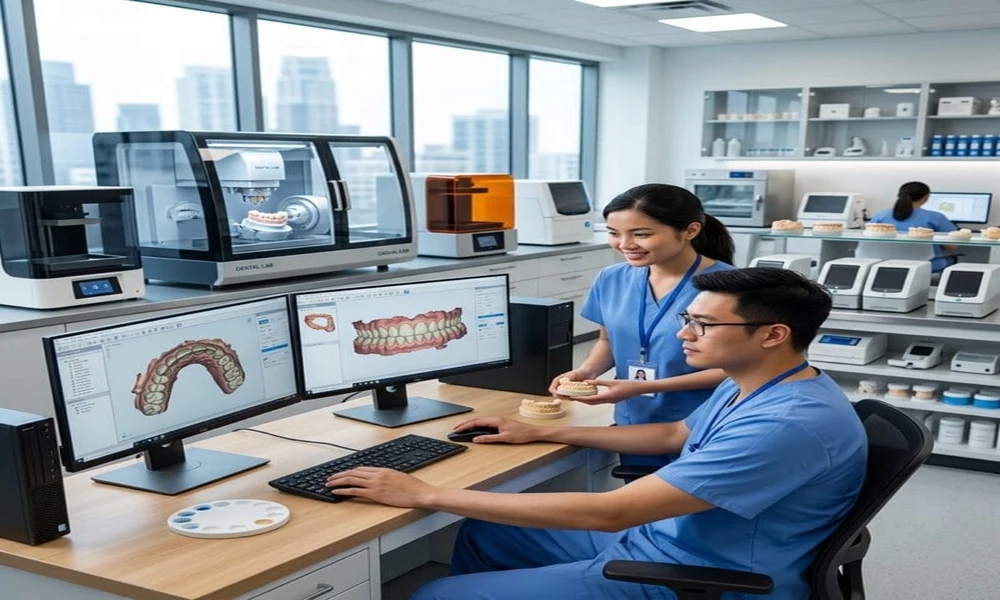
Digital methods change the workflow. A scan records the remaining teeth and soft tissue, and design software is used to plan the framework, clasp positions, and tooth arrangement on screen. The design can be checked for support and comfort before it goes to production.
Specialists in digital denture design pay close attention to details patients feel directly. The thickness of the connectors, the position of the clasps so they are discreet and effective, and the way the base spreads pressure across the gums all affect daily comfort.
There are practical advantages as well. Because the design is stored digitally, a lost or broken partial can be reproduced more easily, and adjustments can be made from the original file instead of starting over.
If you wear or are considering a partial denture, ask your dentist whether it will be designed digitally. It may reduce the number of visits and improve the fit, and it is one of the more meaningful upgrades in removable prosthetics.